
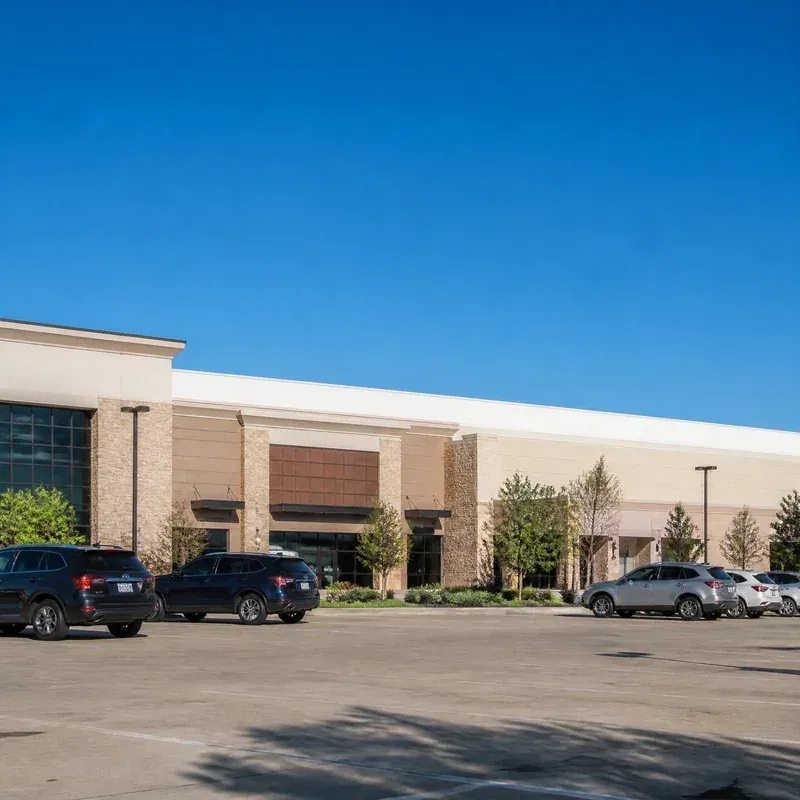
Commercial Metal Roofing Systems That Control Lifecycle Costs

50-year service life. Engineered for Texas thermal cycles.

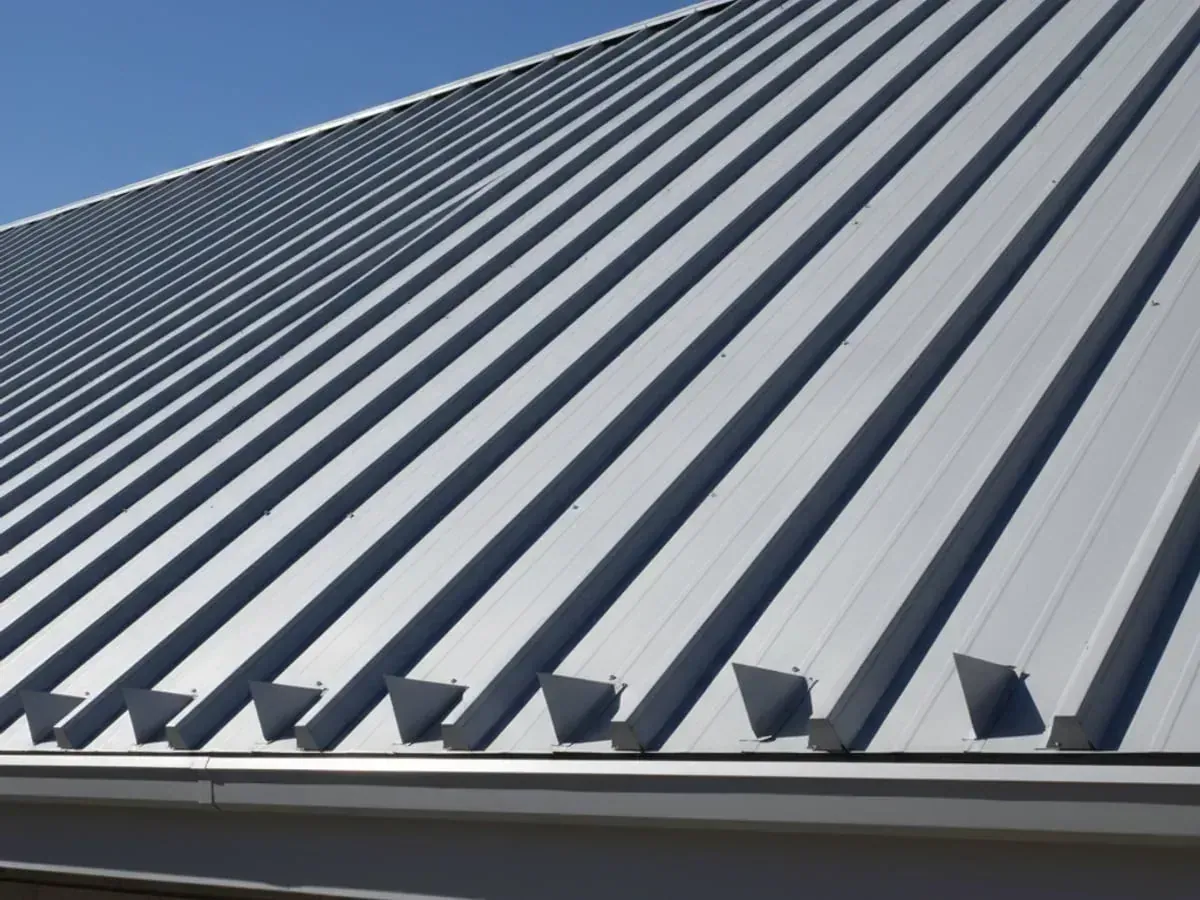
Commercial metal roofing is the longest-lived commercial roof system on the market — properly specified standing-seam panels routinely deliver 50 years of service before replacement comes into the conversation. The variables that determine whether you get those 50 years are panel-run-length engineering for thermal expansion, clip-spacing matched to the local wind zone, and finish coating selected for the climate. Pro Exteriors specs primarily McElroy Metal and Sentrigard panels in Galvalume substrate with PVDF or SMP coatings, and we engineer thermal movement into every install — because in Texas a single day can see a 50°F temperature swing and ignoring that math is how standing-seam roofs develop oil-canning and seam stress fractures within their first decade.

ENERGY STAR Reflectance 50-Year Service Life
50-year service life. Engineered for Texas thermal cycles.

Why Choose Metal?

Six reasons metal is the lifecycle-cost winner across most commercial portfolios.

50-Year Service Life

Standing-seam panels in Galvalume substrate routinely perform 50 years in field service. The lowest cost-per-year of any commercial roof system on a 50-year horizon.

Hail-Damage Resistance

Metal is harder than any membrane material. Hail events that destroy TPO and EPDM produce dimples on metal that don't compromise water-tightness. Insurance carriers routinely reduce premiums on metal-roofed commercial assets.

ENERGY STAR Reflectance

PVDF-coated panels exceed ENERGY STAR reflectance thresholds and reduce HVAC cooling load by 10-30% compared to dark-membrane alternatives on large rooftop areas.

Lowest Lifecycle Cost

Higher install cost than membrane, but no mid-life replacement at year 20-25. Metal roofs typically cost 30-40% less per year over a 50-year analysis.

Architectural Aesthetics

When the roof line is visible from adjacent properties or public roads, metal is a brand asset. Profile selection, color, and seam style all become part of the building's visual identity.

Engineered Thermal Movement

Pro Exteriors engineers panel-run lengths and clip spacing for the local wind zone and temperature range. Texas's 50°F daily swings get accommodated, not ignored.

Where Metal Wins

Industrial & Manufacturing

Manufacturing facilities and industrial plants where rooftop equipment loads, hail exposure, and 50-year ownership horizons all favor metal. The harder substrate handles foot traffic from machine servicers without scarring.

Distribution & Logistics

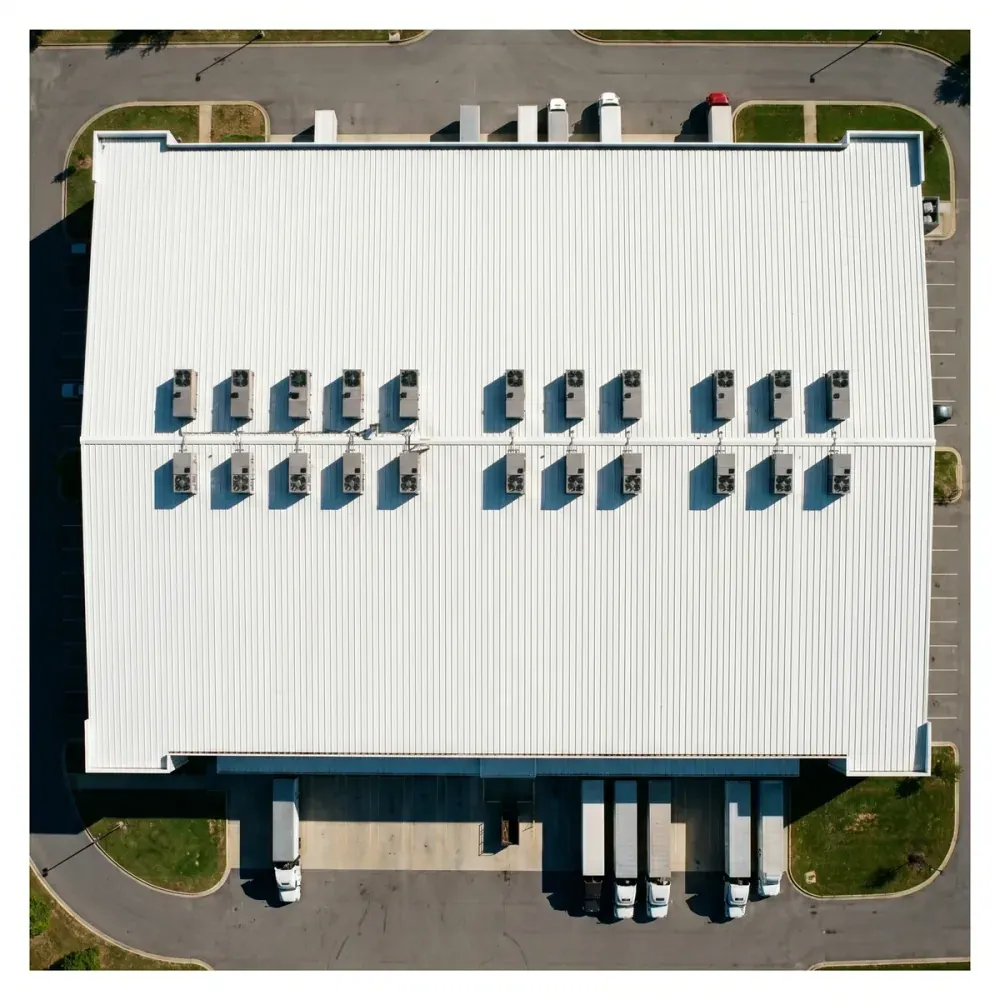
Distribution centers where every hour of weather-related downtime is a real operational cost. Metal's hail and wind resistance keeps shipping operations running through events that close membrane-roofed facilities.

Architectural Commercial

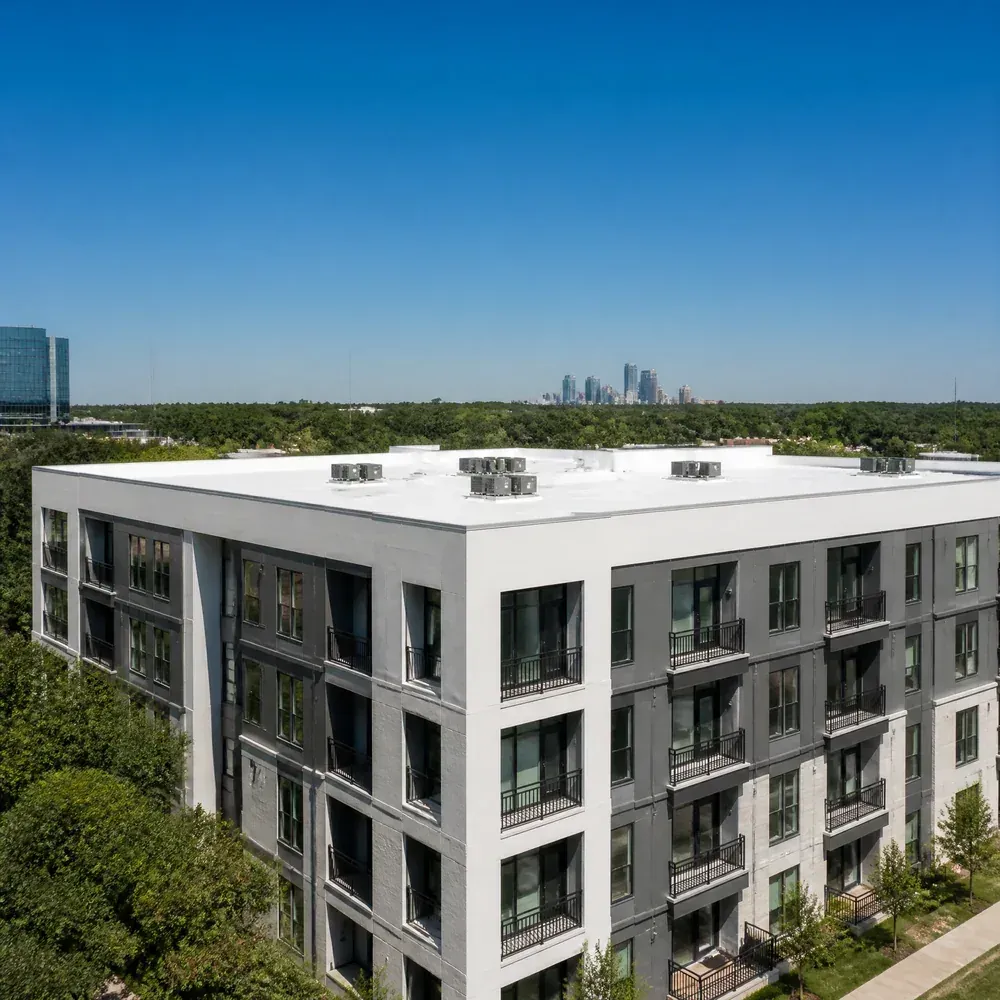
Office buildings, mixed-use, retail anchors where the roof is part of the building's visual identity. Standing seam, exposed seam, and snap-lock profiles each carry distinct aesthetics.

Our Quality Process

Our Quality Process
1

Structural & Substrate Assessment

Verify load capacity for new metal panel weight, inspect existing deck or substructure for corrosion or fastener issues, document with photo evidence. We don't install metal panels over substrate that isn't structurally sound.

2

Panel Engineering for Thermal Movement

Calculate panel-run lengths and clip spacing for the local wind zone and the temperature range the building will see. Submit panel-specification drawings before the order goes to McElroy or Sentrigard so panels arrive cut and ready to install.

3

Install with Continuous QA + Warranty Registration

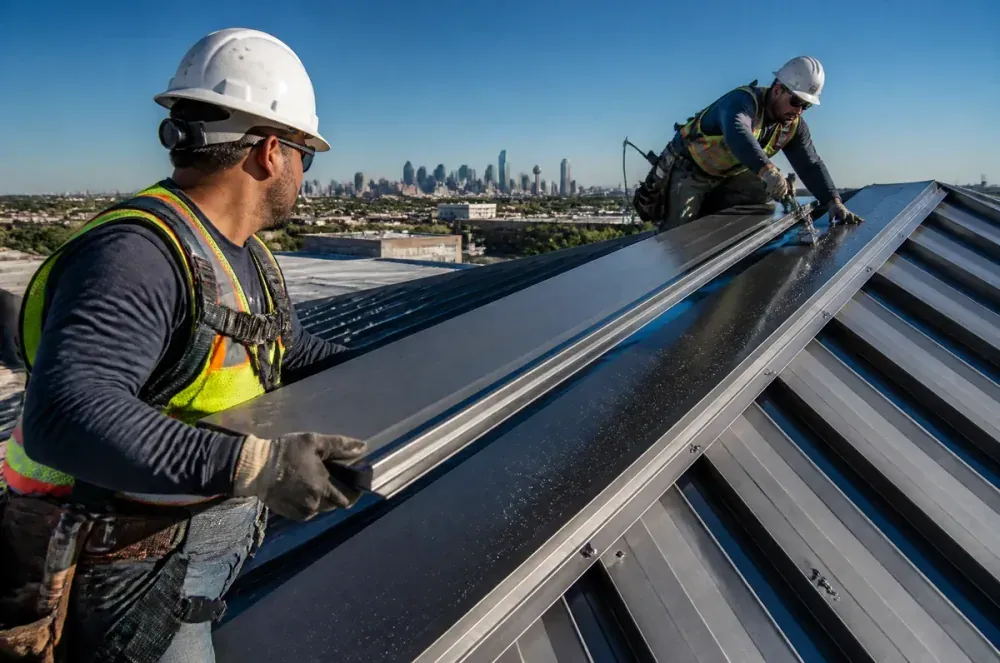
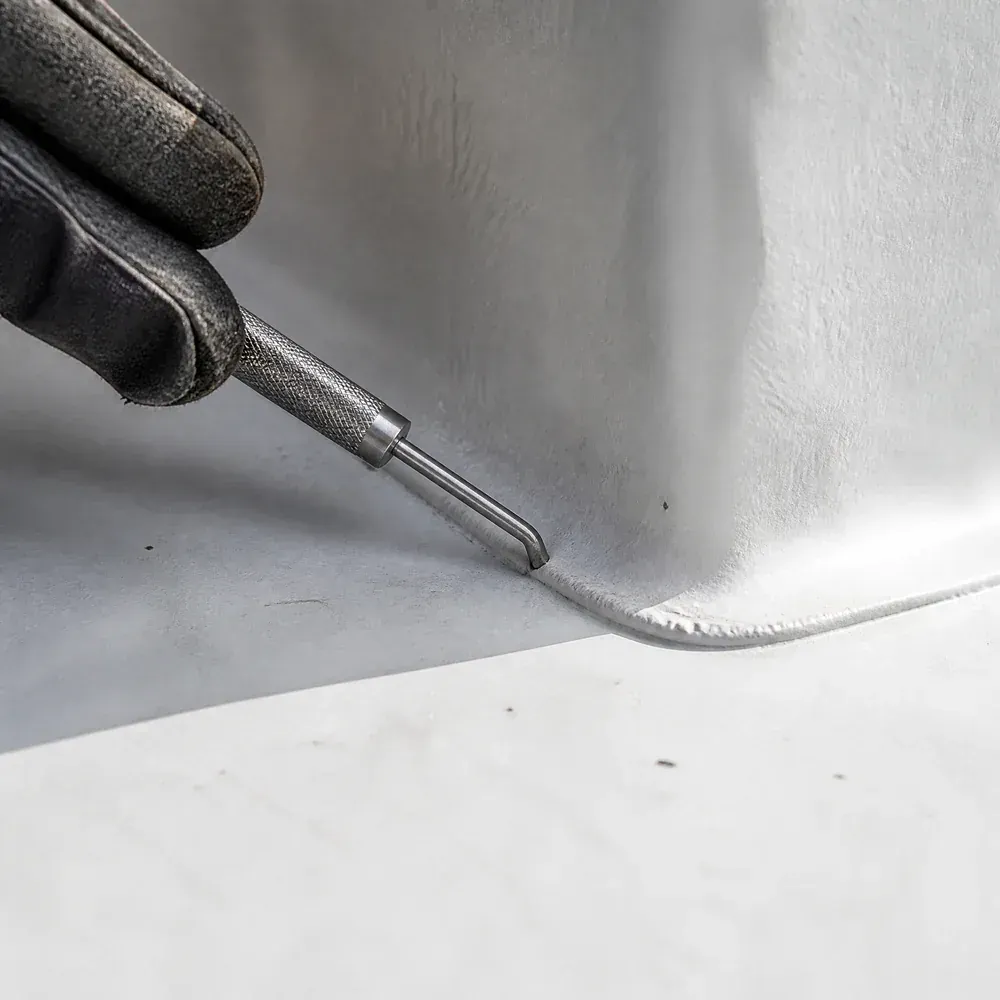
Trained metal-install crews supervised on-site daily. Seam engagement verified panel-by-panel. Final inspection covers fastener torque, thermal expansion clips, and finish-coating integrity. Warranty package — manufacturer paint, weathertightness, and structural — registered before closeout.

Completed Commercial Metal Roofing Projects

Project 1
Project 2
Project 3
Project 4

Commercial metal roofing is one of the best long-term investments for a facility owner to protect its assets. It’s equally important to hire certified professionals to install it. Pro Exteriors’ professional and licensed team includes trained manufacturers certified in metal roofing and tested throughout a vast spectrum of regional projects to cover all the metal roof projects. Commercial roofing solutions ranging from fixing a compromised membrane on a distribution center to implementing a standing seam metal roof for a Class A office campus designed to perform at peak for decades than only years.

What Goes Into a Commercial Metal Roof?

Work begins with the first structural assessment to confirm the existing condition of the roof, load capacity testing of any substrates (commercial-grade metal systems have weight added), coordination with the structural engineer of record where appropriate.

Panels are chosen and sourced from McElroy Metal or Sentrigard (both are top commercial metal panel makers), which have full-range Galvalume and painted steel products, featuring a durable and reflective Kynar 500 PVDF paint coating-these meet Energy Star reflectance requirements and assist in obtaining LEED documentation if a customer desires it.

We even consult with and outsource work to specialized fabrication partners who will custom-build panels and other systems when a roof is so unique that a standard product isn’t suitable (i. e. Curved roofs or standard systems that go directly over a structural deck of irregular shapes).

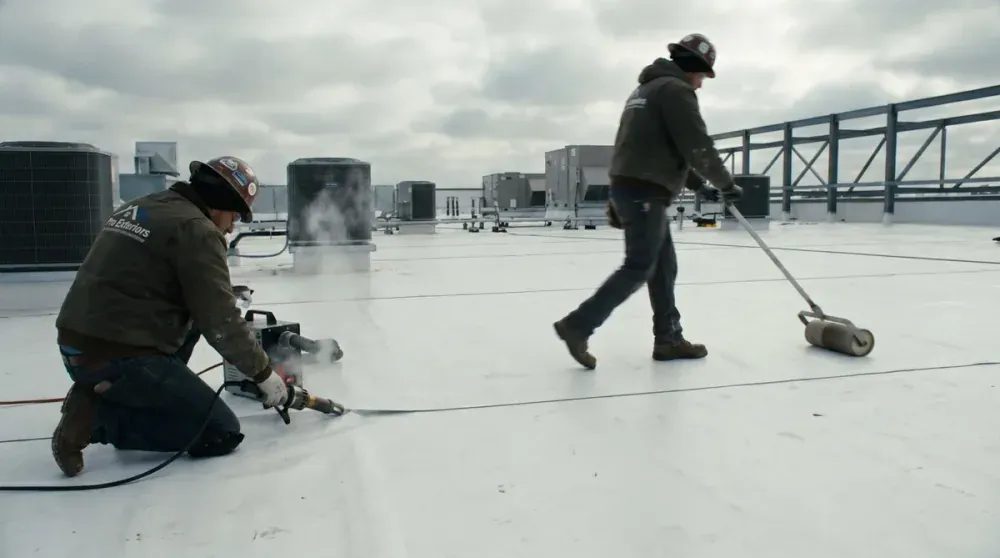
Following is our step-by-step approach to building a safe, resilient roof system: Substrate preparation (including vapor barriers or other required vapor control membranes by zone climate, insulation is layering over the vapor barrier), Clip installation per engineered spacing, Panel roll out and engagement, as it pertains to either snap-lock panel style or through hand crimping of the roof seams, Ridges and eaves are properly finished and secured, followed by any roof penetrations-like HVAC or roof hatch penetrations, every penetration includes two levels of flashing (the initial penetration detail and a second bead of sealant), This sequence closes with a comprehensive inspection of roof seams, thermal scanning and quality assurance testing before the roof project is declared officially completed.

Our Service Area

Our company is headquartered in Richardson, TX, placing Pro Exteriors at the hub of Dallas-Fort Worth, however, we’ve a wide service area including commercial metal roofs installed on buildings and facilities in Plano, Irving, Fort Worth, Arlington, as well as much of the surrounding North Texas area that is the DFW Metroplex region.

Texas weather is severe: hailstorms frequently destroy single-ply membranes, excessive solar heat degrades sealants applied on exposed roof details and Texas’ drastic temperature swings put heavy stress on panels via expansion and contraction each season-the roof will be designed specifically to endure it.

Beyond DFW, we’ve commercial roof crews currently working in the Denver market of Colorado, where extreme snow loads and daily temperature extremes require specific types of clip and panel specifications, Kansas (Wichita) and Missouri (Kansas City) markets, where stringent wind lift requirements demand engineers design for and calculate exact fastener placement to conform to building code and Georgia (Atlanta) markets, where a warm, humid climate and active storm season mandate closeattention be paid to any penetration sealing issues and the overall condition of the roof deck.

Every market region has specific requirements dictated by building codes and has inherent weaknesses or failure modes that our knowledgeable regional project managers understand and plan for when designing your commercial roof system. Visit our commercial roofing projects portfolio to view past work from the above markets.
Service FAQ

What commercial metal roofing systems does Pro Exteriors install?

We install standing seam systems with concealed fasteners, concealed-fastener snap-lock panels, and exposed-fastener systems for industrial and agricultural applications. System selection is driven by structural capacity, climate zone, budget, and warranty requirements — not by what's easiest to install. We source panels primarily from McElroy Metal and Sentrigard, both of which offer Galvalume and PVDF-coated steel in profiles suited to commercial and industrial buildings.

How does commercial metal roofing perform in Texas hail and heat?

Metal panels handle hail events that destroy TPO and modified bitumen membranes — the substrate is simply harder. On the thermal side, PVDF-coated Galvalume panels meet Energy Star reflectance thresholds, which reduces HVAC load on large roof areas. We also engineer clip spacing and panel run lengths to accommodate the thermal expansion cycles that are routine in Texas, where a single day can see a 50-degree temperature swing. Ignoring thermal movement is how standing seam roofs develop oil-canning and seam stress fractures.

What is the realistic lifespan of a commercial metal roof installed by Pro Exteriors?

Properly specified and installed Galvalume standing seam systems routinely reach 40 to 60 years of service life. The variables that shorten that lifespan are installation errors — incorrect clip spacing, inadequate penetration detailing, wrong fastener spec — not the material itself. Our manufacturer certifications with McElroy Metal and Sentrigard support material warranties up to 40 years on qualifying systems, and our workmanship warranty covers installation defects. Enrolling in our ProPlan maintenance program is the most reliable way to keep that warranty coverage intact.

Can a large commercial metal roofing project be completed without shutting down operations?

Yes, and we do it routinely. Phased sequencing is standard practice for occupied facilities — we divide the roof into sections, complete and waterproof each section before moving to the next, and coordinate with your facility team on access windows, noise restrictions, and crane or material staging. For tenants with noise-sensitive operations or data centers with vibration concerns, we schedule mechanical work during off-hours. The project schedule we present at proposal stage reflects these constraints, not an idealized timeline.

How do you document quality control on commercial metal roofing installations?

Every project close-out package includes fastener torque logs, seam inspection records, a thermal imaging survey of the completed roof, material certifications from the panel manufacturer, and as-built drawings that show panel run directions, clip locations, and penetration details. That documentation serves two purposes: it substantiates the manufacturer warranty and it gives your facility management team an accurate baseline for future maintenance and repairs. We don't release final invoices until the close-out package is complete and delivered.

Does Pro Exteriors serve commercial metal roofing projects outside of Texas?

Yes. Our regional crews operate in Denver CO, Wichita KS, Kansas City MO, and Atlanta GA in addition to our Dallas-Fort Worth home market. Each region has distinct code requirements and climate-driven failure modes — snow load and freeze-thaw in Denver, wind uplift engineering in Kansas and Missouri, humidity and storm exposure in Atlanta. Our regional project managers are familiar with local building departments and the specific detailing adjustments each climate demands. Project scope and lead times are consistent across all five markets.

Ready for a 50-year roof?

Get a written metal specification — McElroy or Sentrigard panels, panel-run lengths engineered for Texas thermal cycles.