

commercial roofing
Working with General Contractors on Commercial Roofing Ti...
How roofing contractors work within GC-managed construction schedules—critical path milestones, weather windows, sequence coordination with mechanical subs...
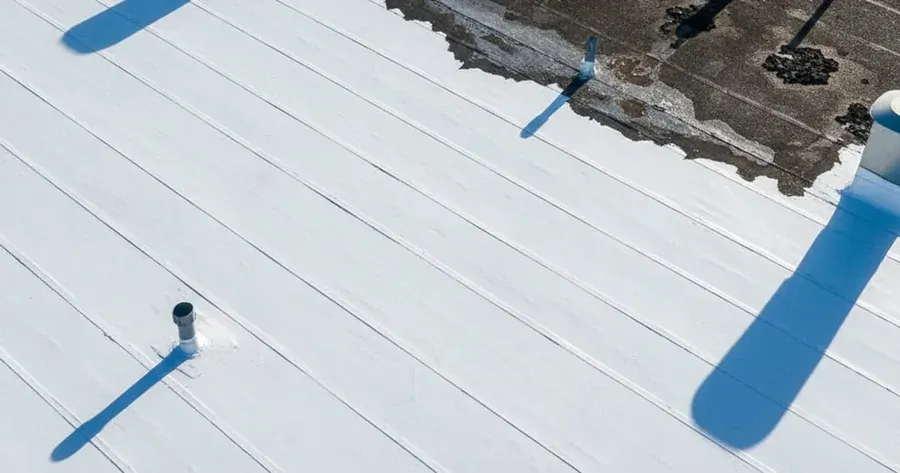
Working with General Contractors on Commercial Roofing Timelines
-
Roofing’s Role on the Critical Path
-
Scope Changes and Change Orders
Roofing is the trade that closes the building. Everything that follows it—interior finishes, MEP rough-in above the ceiling plane, elevator work, exterior cladding in the eave zone—either depends on a weathertight roof or is significantly complicated by the absence of one. That position in the construction sequence gives the roofing contractor real leverage over the project schedule, which makes the GC-roofer relationship one of the most consequential subcontractor relationships on any commercial construction project.
This guide is written for general contractors and project owners who want to understand how roofing timelines work, what creates schedule risk in the roofing scope, and how to structure the GC-roofer relationship to protect the project’s critical path.
Roofing’s Role on the Critical Path
On a standard commercial new construction project, roofing becomes critical path at the point where the structural deck is ready for insulation and membrane installation. Before that point, roofing is typically scheduled with float—the structural steel, deck, and related trades must complete before the roofer can mobilize. Once the deck is ready, the clock starts, and any day of delay in the roofing scope typically translates directly to delay in the substantial completion date.
The critical path handoff from structural to roofing requires two things: a structurally completed and inspected deck, and all rooftop curbs set in their final locations by the mechanical, electrical, and plumbing subs. The second requirement is the more common source of schedule problems. MEP subs frequently install curbs late or in incorrect locations, requiring roofers to work around incomplete equipment installations or to execute post-membrane penetration work that requires more time and produces more warranty risk than properly sequenced curb installation.
Establish a curb freeze date in the project schedule—the date by which all rooftop curbs must be set in final locations—and communicate it to all MEP subs with adequate notice. A 2-to-4-week buffer between the curb freeze date and roofing mobilization is appropriate on most projects. MEP changes requested after the curb freeze date should be treated as scope changes with associated cost and schedule impact.
Weather Windows and Float Planning
Commercial membrane roofing installation is weather-dependent. TPO and EPDM heat-weld seam work requires ambient temperatures above 40°F and declining for the weld adhesion to cure properly. Adhesive-based applications (EPDM fully-adhered systems) require temperatures above 45°F. Rain during installation forces work stoppage and introduces potential for wet insulation if the membrane is not immediately covered.
In the South-Central construction market, the practical implication is that roofing scheduled from November through February on exposed structures carries weather delay risk that must be addressed in the project schedule with contingency float. A project targeting a February substantial completion date with membrane installation planned for December and January has approximately 30 to 40 days of historical weather delay exposure in the DFW market based on NOAA station data for precipitation, freeze days, and wind events that suspend crane and rooftop work.
“GCs who build realistic weather float into the roofing window don’t call us in December to recover a schedule they should have protected. GCs who don’t do that call us in December asking for overtime and weekend crews that cost twice as much as the float they declined to include.”
MEP Sub Coordination Requirements
The roofing contractor’s work intersects with three other subcontractor scopes on every commercial new construction project: mechanical (HVAC curbs and equipment), plumbing (roof drains, vent penetrations, gas line penetrations), and electrical (conduit sleeves, lightning protection system components). Each intersection is a potential quality control failure if coordination is inadequate.
The most consequential coordination requirement is between roofing and mechanical on HVAC curb installation. Curbs must be set to the correct height above the finished roofing surface—typically 8 inches minimum above the completed insulation and membrane assembly—and at the correct elevation relative to the drainage design. Curbs set too low create ponding conditions around equipment; curbs set too high create access problems for maintenance staff and may require field modifications to ductwork connections.
The roofing contractor should participate in a pre-roofing coordination meeting with all MEP subs before membrane installation begins. The agenda should cover: final curb location confirmation against the roofing plan, curb height verification, drain body seating and collar height, all penetration sleeve locations and sizes, and the warranty requirements for any post-membrane penetrations. That meeting, documented in writing with an attendance sheet, provides the audit trail if warranty disputes arise later.
Submittals and Material Lead Times
Commercial roofing submittals—the manufacturer’s data sheets, product specifications, and shop drawings for the proposed assembly—must be reviewed and approved by the architect before material orders can be placed. On fast-track projects where the structural package is released before the architectural specifications are finalized, submittals may be in review at the same time the deck is being installed, creating a sequencing risk where the deck is ready before the materials are approved and delivered.
Primary membrane materials—TPO rolls, polyiso boards, edge metal, and flashing components—typically carry 4-to-8-week lead times from order to delivery. Projects that don’t confirm material availability before they’re needed routinely encounter 2-to-4-week delivery delays that aren’t recoverable without premium freight costs. The roofing contractor should be required to submit material procurement documentation—confirmed purchase orders and expected delivery dates—as part of the construction schedule update process.
Closeout Requirements Before Substantial Completion
The roofing closeout package that the GC needs before certifying substantial completion includes: as-built roofing drawings showing all penetration locations and drain locations as installed; manufacturer warranty registration confirmation; OSHA fall protection documentation for all rooftop access points; AHJ final inspection sign-off on the permitted roofing installation; and the warranty package including coverage terms, compliance inspection schedule, and certified contractor designation.
The most frequently missing item at substantial completion is the warranty registration confirmation. Manufacturer warranties are registered at the manufacturer, not by the roofing contractor alone—the manufacturer must inspect or accept documentation before issuing the warranty certificate. On some systems, that process takes 4 to 8 weeks from installation completion, which means the roofing contractor needs to submit for warranty registration within days of achieving substantial completion, not weeks after. Build the warranty registration timeline into the project closeout plan before construction begins.
Scope Changes and Change Orders
Roofing scope changes during construction typically fall into two categories: design changes requested by the owner or architect, and conditions-based changes driven by deck conditions or MEP coordination failures. Both categories have schedule and cost implications, and both are most efficiently resolved when the GC has a clear change order process agreed to with the roofing subcontractor at contract execution.
The most expensive change order scenario in commercial roofing is a design change to the drainage system—relocating drains, adding drains, or modifying the slope design—after membrane installation has begun or been completed. Structural deck modifications to accommodate drain relocations require coordination with the structural engineer of record and can carry permit implications. Establish the drainage design as a fixed document before roofing mobilization and require written confirmation from all MEP subs that their penetration locations are finalized before the membrane goes down. For a broader look at roofing system selection that affects the scope of work, see choosing a roofing system for new commercial construction.
Commercial New Construction Roofing — GC-Ready
Pro Exteriors works within GC-managed schedules with clear submittal timelines, coordination protocols, and fully documented closeout packages. Licensed in 16 states across the South-Central and Mountain regions.
Choosing a Roofing System for New Commercial Construction: The Decision Framework
Roof Design Considerations for Warehouses and Industrial Buildings
Energy-Efficient Roofing for New Commercial Buildings: What ASHRAE 90.1 Requires
For the service page this article supports, see commercial roofing contractor.
Related reading: /blog/choosing-roofing-system-new-build/ and /blog/what-to-expect-commercial-re-roof/.