

commercial roofing
Choosing a Roofing System for New Construction: The Decis...
How to select the right commercial roofing system for new construction—membrane types, deck compatibility, slope requirements, budget, energy code, and the f...
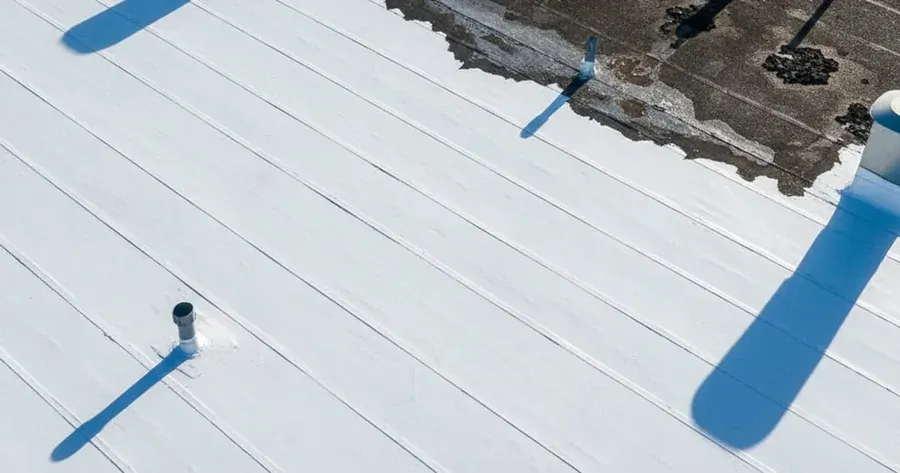
Choosing a Roofing System for New Commercial Construction: The Decision Framework
-
Five Questions Before Specifying
-
Insulation and Energy Code
-
Warranty and Specification
The roofing system selection decision on a new commercial building is made early, carries consequences that compound for 20 to 30 years, and is frequently delegated to the architect or general contractor without meaningful input from the owner. That delegation is understandable in the pressure of a construction schedule, but the owner is the one who will manage the roof for its entire service life—not the architect who specified it or the GC who installed it. Getting the selection right requires that the owner bring specific questions to the specification process before the decision is made, not after.
This guide covers the framework for that decision: the questions that determine which system is appropriate, the performance characteristics of the major system types, the deck and insulation compatibility requirements that constrain the options, and the total cost of ownership factors that make the life-cycle comparison meaningful.
Five Questions to Answer Before Specifying
The roofing system specification should emerge from answers to five questions, not from a default to whatever the architect has used before or whatever the GC’s preferred roofing sub installs.
-
What is the building’s occupancy and roof load profile? A light-gauge steel distribution center has different structural capacity and thermal requirements than a concrete-deck office building. The deck type determines which fastening methods are available, which insulation assemblies are code-compliant, and which membrane systems are warranted in that substrate.
-
What is the design slope? Roof slope is the most fundamental constraint on membrane selection. Slopes below ¼:12 require a system with standing water resistance; slopes above 2:12 may open options for steep-slope systems that are not appropriate for low-slope applications. The IBC’s minimum slope for low-slope membrane roofing is ¼:12; anything less requires a positive drainage design with documented engineering support.
-
What are the local climate drivers? UV exposure, hail frequency, wind speed design requirements, thermal cycling amplitude, and precipitation intensity all affect which system performs best over a 20-year service life. A white TPO membrane is an excellent choice in a high-UV, low-hail market; it is a harder sell in a market with frequent large-hail events where impact resistance is the primary performance criterion.
-
What is the energy code requirement? ASHRAE 90.1 and the applicable state energy code set minimum insulation R-values that must be met by the roofing assembly. In Climate Zones 3 and 4 (covering most of Texas, Oklahoma, and Kansas), the minimum continuous insulation for a commercial roof is R-20 to R-25 depending on occupancy type. The insulation specification affects the total assembly cost and may constrain available membrane options based on weight and fastening load.
-
What is the owner’s maintenance commitment? A no-dollar-limit manufacturer warranty on a TPO or EPDM system requires periodic compliance inspections by a certified contractor. If the owner’s facilities team has no intention of maintaining a documented maintenance program, a shorter-term warranty on a more durable system may serve better than a long-term warranty with compliance requirements that won’t be met.
Membrane System Options for Commercial New Construction
Three membrane types dominate commercial new construction for low-slope applications: TPO (thermoplastic polyolefin), EPDM (ethylene propylene diene monomer), and PVC (polyvinyl chloride). Each has a distinct performance profile.
TPO is the market-share leader in commercial new construction as of 2026, driven by its favorable combination of UV reflectivity (white and light-colored membranes achieve Solar Reflectance Index values of 80+), heat-weldable seams, and competitive installed cost of $7 to $11 per square foot for a standard 60-mil mechanically attached assembly. TPO’s primary weakness is seam integrity under sustained chemical exposure, particularly in applications with significant exhaust discharge from kitchen or manufacturing operations.
EPDM remains the preferred system in climates with severe thermal cycling—cold climate regions where the membrane’s elasticity at low temperatures outperforms TPO—and in applications where chemical resistance is a design requirement. EPDM seams are adhesively bonded rather than heat-welded, which requires more careful contractor quality control during installation. Installed cost for standard 60-mil EPDM runs $6.50 to $10.50 per square foot.
PVC is specified in applications where chemical resistance is paramount—restaurants, food processing, laundries, and buildings with significant chemical exhaust—because PVC’s resistance to oils, fats, and many solvents exceeds both TPO and EPDM. PVC is more expensive ($9 to $14 per square foot installed) and less widely available through manufacturer certification programs, but it is the correct choice when chemical exposure is a design condition.
“The most common specification mistake we see on new construction is treating membrane selection as a cost-per-square-foot comparison without accounting for the substrate, the climate, and the occupancy. A slightly more expensive system that’s right for the building outperforms the cheaper system that was wrong for it every time.”
Deck Compatibility and Fastening Methods
The structural deck is the platform on which every other component of the roofing assembly rests, and its type constrains the available fastening methods for insulation and membrane. The three most common commercial deck types in new construction are steel deck, concrete deck, and wood deck (including plywood and structural wood fiber).
Steel deck is the most common substrate for commercial new construction in distribution, light industrial, and big-box retail applications. It accepts mechanical fasteners (the standard fastening method for both insulation and membrane) but requires attention to the deck gauge and rib profile to confirm that the fastener pullout values meet the design wind uplift requirement. FM Global and the local building code specify minimum uplift resistance values; the roofing contractor’s fastener pattern must be engineered to meet those values on the specific deck, not on a generic assumption.
Concrete decks accept both mechanical fasteners and adhesive application. Adhesive-set insulation on concrete deck produces a quieter roof (no fastener drum resonance during rain events), which is preferred in office and retail applications where interior acoustics matter. Adhesive application also eliminates the thermal bridging associated with mechanical fasteners, which contributes to slightly better whole-assembly R-value performance.
Insulation Specification and Energy Code Compliance
Polyisocyanurate (polyiso) is the dominant insulation in commercial new construction, valued for its high R-value per inch (R-5.6 to R-6.5 per inch, depending on thickness and temperature). To meet ASHRAE 90.1 requirements in Climate Zones 3–5, a typical commercial roof requires 3.5 to 4.5 inches of polyiso insulation in a single or double-layer assembly. Double-layer assemblies with staggered and offset joints are required by most manufacturers to qualify for NDL warranty coverage, because single-layer joints create a linear weak point in the assembly.
Warranty and Specification Requirements
The manufacturer warranty on a new commercial roofing system is an asset that has real economic value—it transfers risk from the property owner to the manufacturer for a defined period. NDL (no-dollar-limit) warranties cover the full cost of materials and labor to repair or replace a warranted system that fails within the coverage term. They are available from major membrane manufacturers at terms of 10 to 30 years, depending on the membrane, the contractor’s certification status, and the assembly specification.
NDL warranties require that the installation be performed by a manufacturer-certified contractor, that the assembly meet the manufacturer’s specification (specific membrane thicknesses, insulation types, fastening patterns, and flashing details), and that the property owner submit the warranty registration within a defined window post-installation. Missing any of these requirements typically results in a reduced-term or dollar-limited warranty rather than NDL coverage. Confirm with your roofing contractor before installation begins that every specification element is warranted.
Total Cost of Ownership Over the Warranty Term
The installed cost of the roofing system is the starting point, not the endpoint, of the economic comparison between systems. A complete TCO analysis for a 20-year system includes: installed cost, annual maintenance cost, the cost of any required warranty compliance inspections, expected repair frequency and cost based on regional climate exposure, and the projected replacement cost at end of useful life (including insulation and removal).
For comparable assemblies in the South-Central market, the 20-year TCO difference between a well-maintained TPO system ($7.50/SF installed, $0.15/SF/yr maintenance) and a comparable EPDM system ($8.00/SF installed, $0.13/SF/yr maintenance) is smaller than the installed cost difference suggests, because maintenance costs over 20 years compound into a significant figure. The system that costs $0.50 more per square foot at installation but requires $0.04/SF/yr less in maintenance costs over 20 years is, on a TCO basis, the better economic choice on a large building.
For guidance on how roofing systems perform in specific new construction building types, see our companion article on roof design considerations for warehouses and industrial buildings and the comparison of metal vs. membrane systems for new construction.
Roofing for Commercial New Construction
Pro Exteriors works directly with developers, general contractors, and owner’s representatives on commercial new construction roofing across the South-Central and Mountain regions. Manufacturer-certified installation with NDL warranty programs.
Roof Design Considerations for Warehouses and Industrial Buildings
Metal vs. Membrane Roofing for New Construction: A Performance and Cost Comparison
Energy-Efficient Roofing for New Commercial Buildings: What ASHRAE 90.1 Requires
For the service page this article supports, see commercial roofing contractor.
Related reading: /blog/commercial-roof-replacement-cost-guide/ and /blog/working-with-general-contractors-roofing-timeline/.