

commercial roofing
What Happens During a Commercial Roof Inspection: Step-by...
A facility manager's complete walkthrough of what happens during a commercial roof inspection—from pre-inspection briefing through moisture testing, report d...
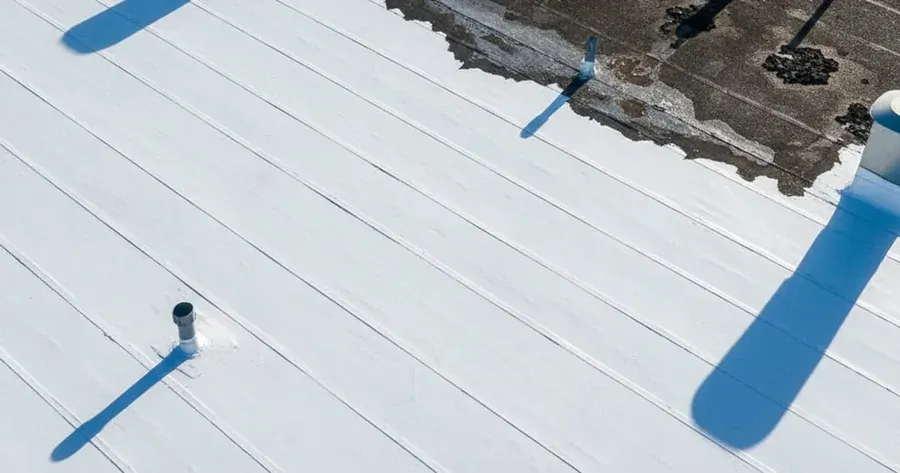
What Happens During a Commercial Roof Inspection: A Step-by-Step Walkthrough
-
What Triggers an Inspection
-
Structural & Drainage Eval
Most facility managers have called a roofing contractor after a leak appeared and accepted whatever the contractor reported without a clear picture of how that report was generated. That opacity is the source of most confusion when it comes to scoping repairs and evaluating bids. Understanding the inspection process from beginning to end gives you a basis for comparing reports, asking informed questions, and determining whether the findings justify the recommended work.
What follows is a step-by-step description of how a qualified commercial roof inspection should proceed. Not every inspection covers every element—budget inspections skip non-destructive moisture testing, which is appropriate for routine annual checks on a relatively young roof but not for a condition assessment on a 15-year-old membrane. Knowing the difference between a complete inspection and a cursory walkthrough is part of knowing how to commission the right scope of service.
What Triggers a Commercial Roof Inspection
Inspections are triggered by one of four conditions: the annual or biannual maintenance schedule, a weather event, an active leak or water intrusion complaint, or a transaction. Each trigger type shapes the scope of the inspection that follows.
Scheduled maintenance inspections follow the framework the NRCA recommends: twice annually for low-slope commercial roofs in active service, with additional inspections following severe weather events. These inspections focus on current condition and emerging deficiencies—the things that need attention before they become failures. They are preventive, not diagnostic.
Post-weather inspections are diagnostic. They’re triggered by a specific event—a hail report in the area, a wind event that exceeded design wind speeds, or a severe convective storm. The question driving these inspections is whether the event caused damage, and if so, what the extent is. The findings may support an insurance claim, a manufacturer warranty claim, or simply a repair prioritization list. The commercial roof inspection services Pro Exteriors provides include both inspection types across all service geographies.
Transaction inspections—pre-purchase, pre-sale, or end-of-lease—are the most comprehensive category. They must answer the question of remaining useful life and deferred maintenance liability, which requires a depth of investigation that routine maintenance inspections don’t include.
The Pre-Inspection Briefing
A thorough inspector gathers information before setting foot on the roof. The pre-inspection briefing typically takes 15 to 30 minutes and covers: the building’s construction year and roof installation date, the membrane type and manufacturer, any prior inspection reports or repair records in the facility’s possession, any known areas of active leaking or historical water intrusion, and the inspection’s purpose (maintenance, post-storm, or due diligence).
That context changes what the inspector looks for. On a 20-year-old TPO roof with a history of leaks in the northwest corner, the inspector will prioritize that corner, look for evidence of previous repairs that may have masked underlying membrane degradation, and spend more time probing seams in that quadrant. Without the briefing, the inspector may walk the entire field surface at uniform depth and miss the concentrated risk area entirely.
“The clients who get the most out of an inspection are the ones who hand us the last two reports and show us where the building has leaked in the past. We can do our own discovery on a cold call, but a good briefing turns a four-hour inspection into a two-hour one with better findings.”
The visual assessment is the inspection’s core phase and covers the entire accessible roof surface. A trained inspector walks a grid pattern—not a perimeter walk, not a spot-check of known problem areas—to ensure complete coverage. The grid spacing depends on roof size and complexity; on a simple 30,000-square-foot low-slope roof, a 10-foot grid pass covers the surface in roughly 90 minutes. Larger roofs with multiple curbs, penetrations, and equipment installations require proportionally more time.
The visual assessment catalogues findings in six categories: membrane surface condition (blisters, cracks, granule loss, oxidation), seam integrity (adhesion, separation, bridging), flashing condition (base flashings, counterflashings, edge metal), penetration seals (pipe boots, curb flashings, pitch pans), drainage system condition (drain bodies, scuppers, slope assessment), and substrate evidence (deck deflection, standing water stain lines, biological growth patterns that indicate chronic moisture).
Every finding is photographed with a location reference—either GPS coordinates or a grid coordinate on a roof diagram—so the report is actionable. A finding list without location data requires a second site visit to scope any repair, which adds cost and delay.
Non-Destructive Moisture Detection
Visual inspection identifies surface deficiencies. It does not reliably identify wet insulation, because wet insulation beneath an intact membrane is invisible from the surface. Non-destructive moisture detection—infrared thermography or nuclear moisture scanning—is required to map the moisture condition of the insulation assembly.
Infrared thermography works on thermal contrast: after solar loading during the day, dry insulation cools faster at night than wet insulation, which retains heat. An infrared camera scanned during the first two hours after sunset (the thermal capture window) reveals wet areas as warm anomalies against the cooling dry field. The technique requires clear sky conditions, at least four hours of unobstructed solar loading, and roof surface temperatures within a specific range. It maps the moisture condition of the entire roof surface in one pass. For details on when infrared is the right tool versus when visual inspection alone is sufficient, see our guide on infrared vs. visual roof inspections.
Nuclear moisture scanning uses a neutron backscatter device that detects hydrogen atom density—a proxy for water content—in the insulation immediately below the device. It’s slower than infrared (the device must be positioned and read at individual grid points, typically on 10-foot centers) but it works in any weather and at any time of day. It’s the preferred method for verification of infrared-identified anomalies and for roofs where infrared conditions cannot be reliably achieved.
Structural and Drainage Evaluation
The final field phase covers the structural and drainage system. Structural evaluation on a low-slope commercial roof focuses on deck deflection, fastener pullout evidence, and parapet integrity. Deck deflection—visible as depressions or waviness in the field of the roof between structural supports—indicates either overloading, fastener failure, or substrate deterioration. It’s a finding that requires structural engineering review before repair work is scoped.
Drainage evaluation maps the actual flow path of water on the roof surface as it currently exists, not as the original design intended. Over time, roof additions, equipment installations, and structural settlement change where water goes. The inspector walks the drainage path in the sequence: field surface slope → drain locations → drain body condition → conductor pipe access. Every drain is physically checked for debris blockage and seating integrity. Scupper locations and elevations are recorded relative to the finished roof surface elevation at the low point.
The Inspection Report and What Comes Next
A complete commercial roof inspection report has a defined structure: an executive summary, a roof system description, a photographic finding log keyed to a roof diagram, a prioritized repair recommendation list with cost estimates, and a remaining useful life estimate. Reports without cost estimates require a separate bid process to turn findings into actionable decisions. Reports without location references require a revisit to scope repairs. Reports that don’t distinguish between urgent and non-urgent findings leave the facility manager to make that judgment without professional context.
After the report is delivered, the next step is a findings review call between the inspector and the facility manager. This 30-minute conversation covers the top-priority findings in plain language, answers questions about the repair estimates, and establishes a timeline for addressing the urgent items. Without that conversation, reports sit in inboxes and repairs get deferred until a failure makes them unavoidable. For guidance on reading and acting on what the report contains, see our companion article on how to read a roof inspection report.
Schedule a Commercial Roof Inspection
Pro Exteriors provides documented commercial roof inspections with photo logs, moisture mapping, prioritized repair lists, and remaining useful life estimates.
Infrared vs. Visual Roof Inspections: When Each Method Is the Right Tool
How to Read a Roof Inspection Report: A Facility Manager’s Field Guide
How Often Should a Commercial Roof Be Inspected? The NRCA Standard Explained
For the service page this article supports, see commercial roofing contractor.
Related reading: /blog/what-to-expect-commercial-re-roof/ and /blog/tpo-vs-epdm-vs-pvc-membrane-comparison/.