

commercial roofing
TPO vs. EPDM vs. PVC: Which Commercial Roofing Membrane I...
A side-by-side technical comparison of the three dominant single-ply membrane systems — installation cost, energy performance, weld strength, and 20-year lif...
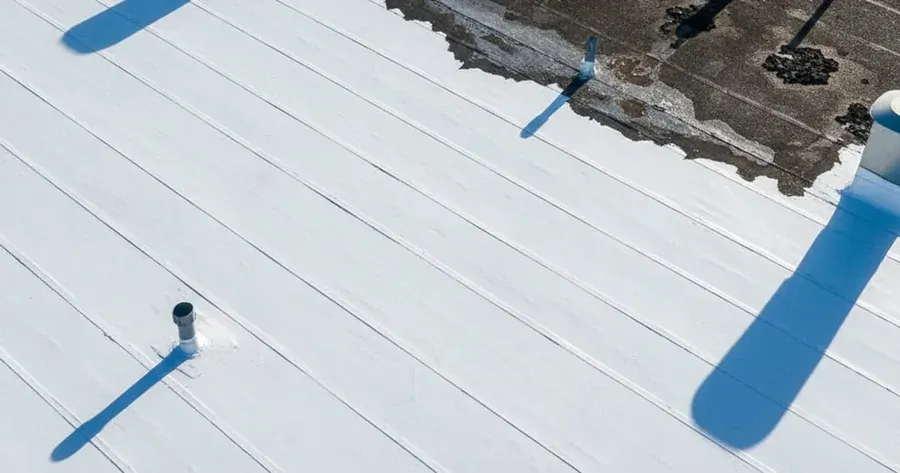
TPO vs. EPDM vs. PVC: Which Commercial Roofing Membrane Is Right for Your Building?
The three dominant single-ply roofing membranes — TPO, EPDM, and PVC — each command significant market share for a reason. They are not interchangeable. Each has specific performance characteristics, installation requirements, lifecycle cost profiles, and climate sensitivities that make it the right choice for certain buildings and the wrong choice for others.
This comparison is designed for commercial property owners, facilities managers, and procurement officers making a real system selection decision — not a general overview written to fill search results. The data comes from real installation and performance records, not manufacturer specification sheets alone.
The Case for TPO: Energy Efficiency at a Mid-Range Price
Thermoplastic Polyolefin became the market-share leader in commercial roofing by threading a needle between performance and cost. It offers reflective energy performance close to PVC at a cost point below it, and installs with heat-welded seams that — when executed properly — are as strong as the membrane itself.
TPO’s defining advantages:
-
Solar reflectance: White TPO membrane reflects 75–85% of solar radiation, reducing rooftop temperatures by 40–50°F compared to dark membranes. This directly reduces cooling loads in commercial buildings — EPA Energy Star data suggests 10–15% annual HVAC savings in hot climates.
-
Heat-welded seams: Unlike EPDM (adhesive seams), TPO seams are thermally fused with hot-air welding equipment. A properly executed TPO seam achieves seam strength equal to or greater than the membrane body, making it the strongest seam in the single-ply category.
-
Mid-range installed cost: At $7–$12 per square foot installed (60-mil, mechanically attached), TPO is priced below PVC while offering comparable energy performance.
-
Material availability: TPO is manufactured by every major roofing membrane producer (GAF, Carlisle, Johns Manville, Firestone, Sika). This means competitive bidding, broad installer certification, and accessible repair material anywhere in North America.
TPO’s documented weaknesses: formulation inconsistency across manufacturers (some early TPO products from the 2000s had documented premature aging issues), sensitivity to installation quality (heat-welded seams require skilled operators — a poorly welded TPO seam is worse than an EPDM adhesive seam done correctly), and susceptibility to grease and oil from kitchen exhaust systems (unlike PVC, TPO is not inherently oil-resistant).
EPDM: The Proven Workhorse for Low-Slope Applications
EPDM is the most field-proven commercial membrane in service, with a performance record extending back to the 1960s. Its thermoset rubber composition gives it properties no thermoplastic system can match: cold-temperature flexibility down to -40°F, outstanding resistance to ozone and UV degradation, and a track record of 30–40 year service life in real-world installations.
EPDM’s advantages over the thermoplastics:
-
Cold-climate performance: EPDM remains flexible and maintains seam integrity at temperatures where TPO and PVC become brittle and prone to cracking. For buildings in Colorado, Kansas, and Missouri — all in the Pro Exteriors service territory — this cold-temperature performance is a meaningful advantage.
-
Proven longevity: 30-year-plus service lives are documented in field conditions. No thermoplastic system has equivalent real-world long-term data — TPO is simply not old enough yet.
-
Lower cost per year of service: While EPDM installed cost is similar to TPO ($6–$11 per square foot), its longer expected service life means lower annualized cost when modeled over the full lifecycle.
EPDM’s primary disadvantage is its seam system. Adhesive seams require precise surface preparation and primer application to achieve full bonding — and older installations with water-based adhesives are now experiencing seam failures as those adhesives have aged past their performance envelope. Modern EPDM seam tape systems have largely addressed this, but the perception of EPDM seam vulnerability persists and is partially deserved for older installations.
EPDM’s black color is also a disadvantage in hot climates. Black membrane surface temperatures can reach 170–180°F under direct Texas summer sun — significantly increasing HVAC cooling loads compared to reflective TPO or PVC. White and light-grey EPDM formulations are available but command a cost premium and have less field longevity data than standard black.
“We see the EPDM versus TPO debate play out differently in different climates. In Dallas and Houston, reflective TPO almost always wins on energy cost alone. In Denver and Kansas City, where you need cold-weather flexibility and freeze-thaw performance, EPDM still has a compelling argument. The right answer depends on the building’s location and its primary operational cost concern.”
PVC: Premium Performance in Chemical-Exposure Environments
Polyvinyl Chloride is the premium tier of the single-ply category — higher installed cost, better chemical resistance, and stronger plasticizer-enhanced flexibility than standard TPO at comparable thickness. PVC has been in commercial service since the 1970s and has a well-documented performance record, particularly in applications where EPDM and TPO are vulnerable.
PVC’s specific advantages:
-
Chemical resistance: PVC is inherently resistant to oils, greases, and many solvents. For restaurant facilities, food processing plants, or buildings with kitchen exhausts draining onto the roof surface, PVC is the only single-ply membrane that provides reliable protection against grease-accelerated degradation. TPO and EPDM will fail rapidly in sustained grease contact.
-
Fire performance: PVC carries inherent fire-retardant properties from its chlorine content, achieving Class A fire ratings without additional treatment.
-
High-wind resistance: Fully adhered PVC systems with premium formulations achieve FM Global 1-90 and 1-105 wind uplift ratings — among the highest in the single-ply category.
-
Energy performance: White PVC achieves solar reflectance values comparable to white TPO (75–85%), qualifying for Energy Star and contributing to cool roof incentive programs.
PVC’s disadvantages: highest installed cost in the single-ply category ($8–$14 per square foot), plasticizer migration over time (plasticizers can leach out of PVC as it ages, causing brittleness at the membrane edges and flashing terminations), and seam sensitivity to incorrect heat-welding temperature (over-welded PVC seams are more prone to splitting than over-welded TPO).
Side-by-Side: Cost, Lifespan, R-Value, and Key Properties
Climate Matters: Which System Performs Best in Texas Heat?
Pro Exteriors operates primarily in three distinct climate zones: the Texas Gulf and North Texas corridor (hot-humid to hot-dry), Colorado Front Range (semi-arid, high UV, wide temperature swings), and the Kansas-Missouri corridor (continental, significant freeze-thaw cycling, hail activity). System performance varies meaningfully by climate zone.
Texas (Dallas, Houston, Austin service areas): Reflective white TPO is the dominant recommendation for standard commercial applications. The energy savings from cool-roof performance are real and measurable in Texas summer conditions, and they offset the cost premium over standard roofing within 3–5 years in most building types. For restaurant or food service facilities, PVC is the mandatory choice regardless of cost.
Colorado (Denver/Front Range service area): EPDM or TPO both perform well. The high-altitude UV exposure is significant — choose 60-mil or 80-mil membranes over 45-mil, and specify UV-stable formulations regardless of manufacturer. The hail frequency in the Front Range is one of the highest in North America; post-storm inspection protocols should be part of any maintenance program for Colorado buildings.
Kansas and Missouri: Freeze-thaw cycling gives EPDM a slight performance edge over thermoplastics for buildings with minimal HVAC rooftop penetrations. For mechanically complex rooftops, heat-welded TPO seam integrity in cold conditions is superior to adhesive EPDM seams that may experience adhesive failure when installed near the temperature threshold.
The membrane selection decision reduces to five questions:
-
Does your building have restaurant or food service exhaust on the roof? If yes, PVC is the answer. Full stop.
-
Is this building in a climate below -20°F seasonally? If yes, EPDM has a meaningful cold-performance advantage.
-
Are energy costs a primary concern and is the building in a hot climate? If yes, white TPO or white PVC over black EPDM.
-
Are you optimizing for 25-year lifecycle cost over 20-year initial cost? EPDM’s longer expected service life often produces the lowest cost-per-year figure in full lifecycle models.
-
Does the building carry FM Global or specific wind-uplift requirements? Confirm the specific FM approval numbers required and verify that the selected system and fastening pattern achieves them. This is a non-negotiable specification item, not an upsell.
For most standard commercial applications in the Pro Exteriors service territory — distribution centers, office buildings, retail — 60-mil TPO with fully adhered or mechanically attached installation and heat-welded seams is the default recommendation. It offers the best combination of energy performance, installation quality consistency, and cost in the current market. EPDM and PVC each have specific applications where they are clearly the superior choice, and the selection should always be driven by building-specific requirements rather than contractor preference. See our full guide to how long commercial roofs last by system type for lifecycle planning context, and our commercial roof replacement service for system-specific estimates.
Talk to a Membrane Specialist
Pro Exteriors provides system-specific recommendations based on your building type, climate zone, and operational requirements — not on which product we have in inventory.
How Long Does a Commercial Roof Last?
Commercial Roof Replacement Cost Guide
What to Expect During a Commercial Re-Roof
For the service page this article supports, see commercial roofing contractor.
Related reading: /blog/what-happens-during-roof-inspection/ and /blog/storm-season-prep-commercial-roofs/.