

storm damage
What to Do When Your Roof Leaks: A Step-by-Step Response...
Active roof leak? Here's what to do in the first hour — protect your interior, document damage correctly, and get the right kind of help on-site fast.
Home › Resources › Emergency Roof Repair
What to Do When Your Roof Leaks: A Step-by-Step Response Guide for Homeowners
A roof leak is not a problem that improves with time. Water moves through your home’s structure systematically—through framing, insulation, drywall, and eventually into living spaces—causing damage that compounds hourly. The difference between a $2,000 repair and a $15,000 restoration often comes down to the first two hours after you notice water coming through your ceiling.
This guide covers the immediate actions that protect your home, the information you need to gather, and what to expect when professionals arrive. The goal is to minimize water damage while you arrange for emergency roof repair.
First 15 Minutes: Stop the Interior Damage
Water inside your home requires immediate containment. Your priority is not fixing the roof—it’s preventing water from saturating insulation, drywall, and structural components.
-
Locate the source of water entry. Go to the attic or crawlspace directly above where you see water damage. Bring a flashlight. Water stains on the underside of roof decking, wet insulation, or active dripping will show you where water is entering. The leak’s entry point is often 6 to 12 feet horizontally from where water appears on your ceiling, because water travels along framing and insulation before dripping down.
-
Place buckets or containers under active drips. Position them to catch water before it hits drywall or flooring. If water is pooling in the attic, use a wet-dry vacuum to remove standing water. Do not leave water sitting on attic insulation or wood framing.
-
Move contents away from the affected area. Remove furniture, electronics, and personal items from the room where water is entering. Wet drywall and insulation create conditions for mold growth within 24 to 48 hours [Representative stat — not yet sourced]. Do not wait for a roofer to arrive before protecting your belongings.
-
Increase ventilation. Open windows in the affected room and adjacent spaces. Use fans to move air across wet surfaces. This slows mold colonization and helps moisture evaporate from materials.
-
Turn off electrical circuits serving the affected area. If water has reached ceiling fixtures, switches, or outlets, turn off the corresponding circuit breaker. Water and electricity create electrocution hazard. Do not touch wet electrical components.
Where the Leak Is Probably Coming From
Roof leaks follow predictable patterns. Understanding where water typically enters helps you communicate accurately with your roofer and assess whether the problem is urgent.
Leaks that occur during heavy rain and stop when rain ends often indicate flashing failure or membrane compromise at specific points. Leaks that persist after rain ends or occur during light rain suggest systemic problems—failed sealant, deteriorated membrane, or structural issues—that require professional intervention regardless of weather.
When to Call for Emergency Service
Not all roof leaks require emergency response. Understanding the difference between urgent and routine repairs affects both cost and outcome.
Call for emergency service immediately if:
-
Water is actively entering your home during rainfall or weather events
-
Multiple rooms or large areas are affected
-
Water is entering electrical panels, HVAC equipment, or other critical systems
-
You have a flat or low-slope roof with standing water or visible damage
-
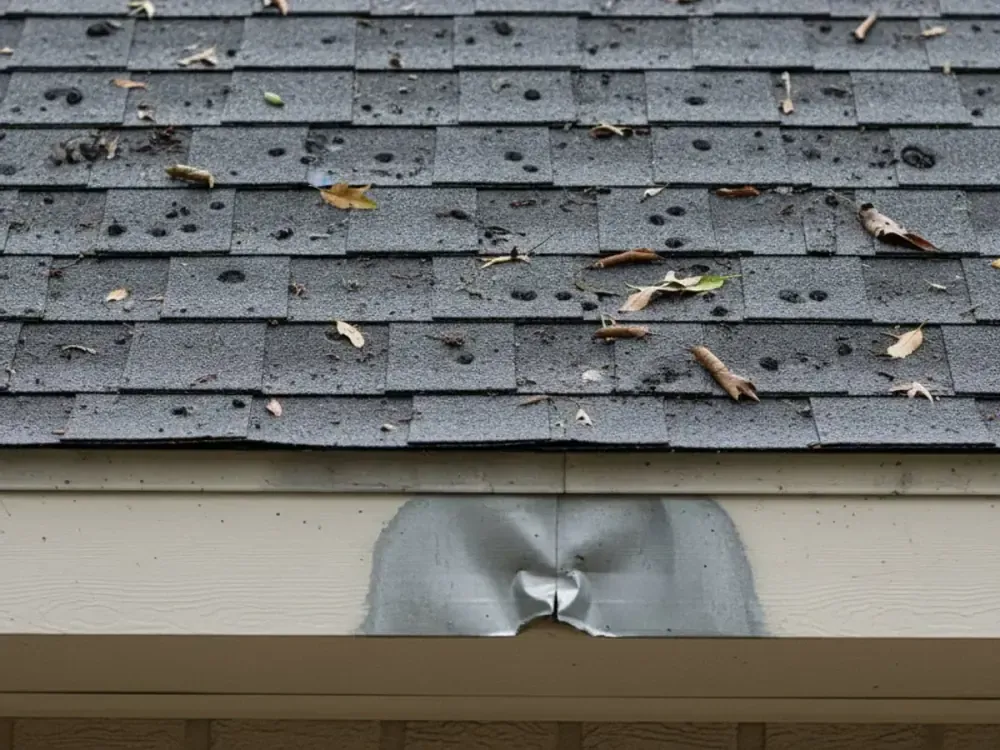
Severe weather (hail, high winds, tornado damage) has visibly damaged your roof
Schedule routine service if:
-
Water damage occurred but has stopped, and weather is clear
-
You notice water stains or minor dampness without active leaking
-
You found damaged shingles or flashing during inspection, but no water entry is occurring
Pro Exteriors provides emergency roof repair throughout Texas, Colorado, Kansas, and Missouri. In Dallas, Richardson, Euless, Denver, Wichita, and Kansas City, emergency response typically arrives within 4 to 6 hours of your call. Response time depends on current demand and your location. Call to confirm availability rather than assuming immediate arrival.
What to Document Before Anyone Arrives
Documentation serves two purposes: it creates a record for insurance claims and it provides your roofer with baseline information about damage extent and progression.
-
Water stains and damage on ceilings, walls, and flooring—capture wide shots showing room context and close-ups of damage
-
Wet insulation or framing visible in the attic—photograph from multiple angles
-
Active water entry or dripping—video is especially useful for showing water flow patterns
-
Damaged roof surface visible from ground level—shingles, flashing, membrane tears
-
Date and time stamps on all photos—most phones do this automatically
Write down the following information before calling your roofer:
-
When you first noticed the leak (date and time)
-
Weather conditions at the time (rain, wind, temperature)
-
Whether water is actively entering or has stopped
-
Your roof’s approximate age (if you know it)
-
Any previous roof repairs or damage
This information accelerates diagnosis and helps your roofer determine whether the problem is isolated or systemic.
Temporary Fixes That Work — and Those That Don’t
Ready to Talk to an Expert?
Pro Exteriors serves commercial and residential clients across Texas, Colorado, Kansas, and Missouri.
Emergency Tarping: What It Costs
Temporary vs. Permanent Roof Fixes
Will Insurance Cover Emergency Roof Repair?
For the service page this article supports, see storm damage roof repair.
Related reading: /blog/will-insurance-cover-emergency-roof-repair/ and /blog/texas-storm-season-roofing-faq/.