

commercial roofing
Commercial Roof Preventive Maintenance Checklist: Every S...
A facility manager's seasonal inspection checklist for commercial roofing systems — drains, flashings, penetrations, membrane conditions, and post-storm prot...
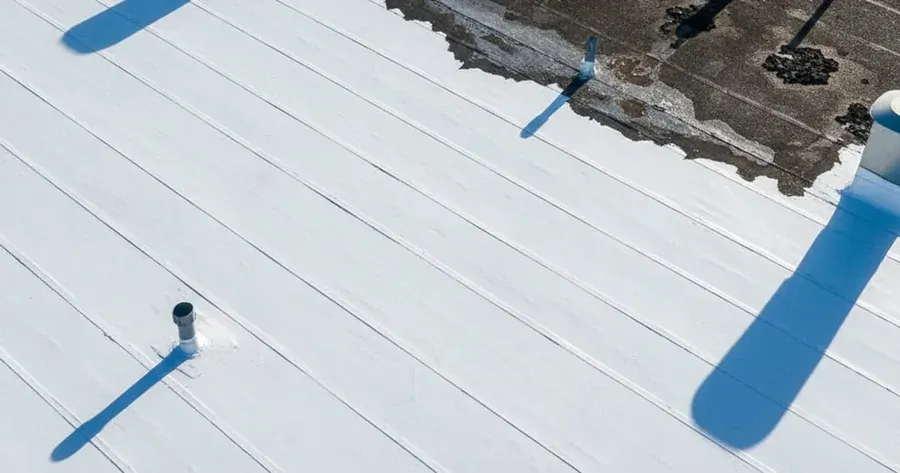
The Commercial Roof Preventive Maintenance Checklist: What to Inspect Every Season
A commercial roof is the largest single piece of building envelope a facility manager is responsible for. It’s also the asset that causes the most expensive unplanned disruptions when ignored between formal inspections. A structured seasonal checklist doesn’t replace professional inspection — it’s the tool that tells you whether conditions have changed enough since the last professional visit to warrant calling one early.
This checklist is built for facility managers and property maintenance directors who are doing self-managed walkthroughs between professional service calls. It covers the four inspection windows every commercial roof maintenance program should include: spring, summer, fall, and post-storm. The documentation section at the end matters as much as the inspection itself — because an undocumented finding is a finding that doesn’t exist when a warranty claim comes up.
Spring: Post-Winter Damage Assessment
Spring is the most consequential inspection of the year for buildings in Texas, Colorado, and the Midwest. Winter delivers freeze-thaw cycles, ice damming in colder climates, and the first hail events of the calendar year — all before April. The spring inspection is the window where you determine what winter left behind before summer heat locks it in as deferred maintenance.
Start at the drainage system. Every interior drain, scupper, and gutter should be cleared of winter debris — leaves, grit, insulation scraps — and confirmed to flow freely. A blocked drain on a low-slope commercial roof doesn’t just cause ponding; it causes structural loading that exceeds the design dead load on steel decks. The spring inspection is not the time to skip the drain check.
-
Clear all roof drains, scuppers, and gutters of debris
-
Inspect all seams and laps for lifting, separation, or bubbling
-
Check all pipe boot flashings for cracking or separation
-
Inspect HVAC curb flashings for gaps or movement
-
Look for blistering or ridging on the membrane surface
-
Check parapet wall cap metal for loose fasteners or joint separation
-
Inspect penetrations for sealant cracking from freeze-thaw cycling
-
Note any areas of discoloration that indicate moisture intrusion
“We see more claims in April and May than any other month — not because of spring storms, but because winter damage sat undocumented for three months and then a spring rain turned a small seam issue into a ceiling collapse.”
Summer: Heat Stress and HVAC Interaction Points
In Texas, a black membrane surface can reach 170°F on a clear August afternoon. Even white TPO membranes reach 120–140°F under sustained summer sun. That thermal cycling — from 70°F overnight to 140°F at mid-day — creates dimensional movement in every roofing material. Over years, it works flashings loose, fatigues sealants, and opens laps at membrane field seams.
The summer inspection focuses on thermal movement damage and the specific failure points created by rooftop mechanical equipment. HVAC units sit on curbs that are penetrating the membrane — and they vibrate. Compressor vibration loosens curb flashing bonds over time, particularly on older roofs where the flashing sealant has lost elasticity. Every curb should be manually pressed and checked for movement.
Solar penetrations deserve special attention during the summer inspection. If your building has added rooftop solar since the last professional inspection, confirm that the mounting penetrations were flashed properly and that the ballast weight of ballast-mounted arrays hasn’t exceeded the design load for your deck system. A 3,000-panel solar array on a 200,000-square-foot roof can add 12–15 lbs/sq ft of dead load — potentially half the design capacity of a 1970s steel deck.
Fall: Pre-Storm Season Preparation
In Texas and the Southern Plains, fall storm season — late September through November — brings a second active hail window and the region’s highest-intensity wind events. The fall inspection is a pre-season check. You’re looking for anything that will fail under storm stress before the storms arrive.
Drainage is again the top priority. Summer heat causes bituminous materials to flow slightly, and debris from summer vegetation accumulates in drains. Clear everything again. Then check the integrity of every exposed edge — gravel stop, drip edge, perimeter metal — because wind uplift events start at the edge and work inward. Any edge metal with loose fasteners is a flag that warrants immediate repair before October.
After Every Significant Weather Event
Any weather event that meets or exceeds these thresholds warrants a roof inspection within 48–72 hours: hail at or above 1 inch diameter, sustained winds at or above 50 mph, or rainfall exceeding 2 inches in 24 hours. In Texas, hail events meeting this threshold occur an average of 8–12 times per year in the DFW metro. Waiting for the next scheduled inspection after a qualifying event is how small damage becomes large damage.
Post-storm inspections don’t require getting on the roof for every event. A ground-level visual — looking for granule accumulation in gutters and downspouts, displaced edge metal, visible membrane tears — combined with an attic inspection for moisture intrusion will triage whether a full roof inspection is warranted. If granules are visible in downspout discharge after a hailstorm, that’s a roof inspection, not a monitoring situation.
What to Photograph and Document
Documentation is the difference between a maintenance record and a warranty claim. Every inspection — even a self-managed walkthrough — should produce a dated photo log organized by roof zone. Photographs should include: all drain conditions (before and after clearing), any membrane anomalies with a measurement reference, all flashing conditions, and a cover photo of each roof zone confirming access and general condition.
Store inspection records with the roof file — not just in your email. Manufacturer warranties require documented evidence of biannual professional inspection. A gap in that record can void the warranty even if the roof itself is in excellent condition. The facility manager who can produce three years of dated inspection records on a 15-year-old roof with a pending claim is in a materially stronger position than one who cannot.
When to Escalate to a Professional
Self-managed inspections have clear limits. Escalate to a professional immediately when you observe: any active or evidence-of-recent interior water intrusion, membrane bubbling or blistering across more than 5% of any roof zone, flashing that has separated by more than ½ inch at any point, edge metal that has pulled away from the fascia, or visible deck rust through a membrane seam. These are not monitor-and-revisit findings — they are immediate service calls.
For how often commercial roofs should be inspected by a professional vs. how often the facility manager should be walking it themselves, the standard is: professional inspection twice per year minimum, facility manager walkthrough quarterly plus after every qualifying storm event. The quarterly facility manager check takes roughly 45 minutes on a 50,000-square-foot roof. What it catches in those 45 minutes costs less to fix than anything that gets missed.
Set Up a Maintenance Program
Our commercial maintenance programs include bi-annual professional inspections, emergency response priority, and detailed photo reports your team can track.
For the service page this article supports, see commercial roofing contractor.
Related reading: /blog/roof-design-considerations-warehouses/ and /blog/metal-vs-membrane-new-construction/.