

commercial roofing
How Often Should a Commercial Roof Be Inspected? A Data-D...
Industry standards say twice a year. Here's why that's a minimum — and what the actual data says about inspection frequency, claim prevention, and roof lifes...
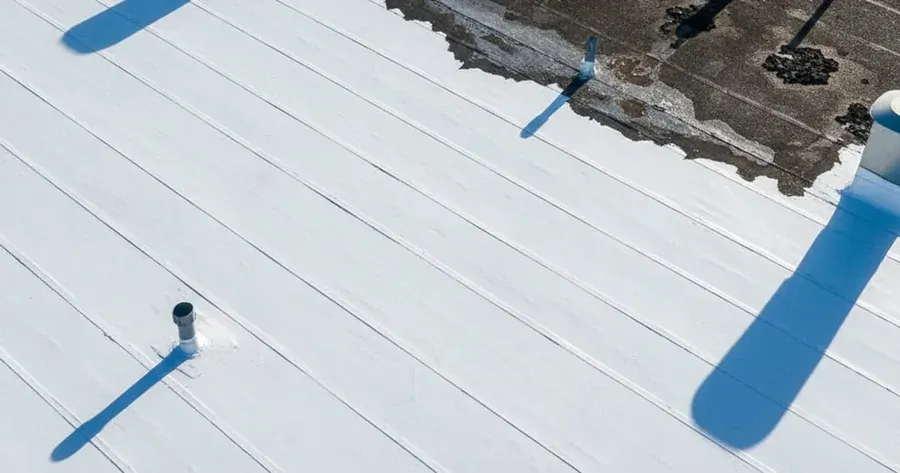
How Often Should a Commercial Roof Be Inspected? A Data-Driven Answer
The National Roofing Contractors Association recommends a minimum of two professional inspections per year on any commercial roofing system. In Texas, Colorado, and the Southern Plains — where hail events, high-wind occurrences, and thermal cycling are more severe than the national baseline — that minimum is not a ceiling. It’s a floor that most commercial properties should be building on, not anchoring to.
The data behind the “twice a year” standard comes from studies of commercial roof claim frequency, which consistently show that roofs with documented biannual inspections generate 60–70% fewer leak-related damage claims than roofs inspected once a year or less. The inspection isn’t the maintenance — it’s the early warning system. What gets caught during a 90-minute roof walk translates to repairs measured in hundreds of dollars, not the tens of thousands that wait behind undetected seam failures.
The NRCA Baseline: Twice a Year Isn’t Optional
The two inspection windows that matter most are spring and fall — post-winter and pre-storm season. Spring inspections reveal freeze-thaw damage in climates that experience below-freezing temperatures, post-winter debris accumulation in drains, and the membrane movement that accumulated over the coldest months. Fall inspections are pre-season preparation: drainage cleared, flashings tightened, any summer heat damage documented before the first significant storm of the fall weather window.
For a building in the DFW metro, “twice a year” should be interpreted as: one spring inspection (March–April) and one fall inspection (September–October). Buildings in Denver or Wichita may need to front-load the spring inspection to April or May, after the last freeze risk passes, and push the fall inspection to August to get ahead of the Colorado hail season peak in July–August.
“Every claim we’ve reviewed where biannual inspection records were missing showed the same pattern: a small seam issue or blocked drain that was visible 6–12 months before the event that triggered the claim. The inspection doesn’t create the problem. It just finds it while it’s still cheap.”
After Hail, High Winds, or Severe Weather
Any hail event producing stones at or above 1 inch in diameter warrants a post-event inspection within 72 hours, independent of the biannual schedule. The ASCE 7 standard for hail impact resistance of common roofing membranes is typically 1-inch diameter at 88 fps impact velocity. Texas hail regularly exceeds this threshold — the DFW metro averages 8–12 qualifying events per year.
Wind events at or above 50 mph sustained warrant the same post-event inspection window. The failure mode at high wind is edge lifting: perimeter metal, gravel stops, and termination bars are the first to release. A post-wind inspection catches these before the next rain event turns a lifted edge into a peeled-back membrane section.
When You Have HVAC or Penetration Work Done
Any time rooftop mechanical equipment is added, replaced, or serviced — and any time a new penetration is cut through an existing membrane system — a targeted post-work inspection within 30 days is warranted. HVAC contractors who are not roofing specialists routinely leave disturbed flashings, lifted membrane sections adjacent to their work zone, and debris in drains. This is not a knock on HVAC mechanics — it’s an acknowledgment that roof membrane integrity is not their scope of work.
The post-penetration inspection is one of the most cost-effective investments in roof longevity a facility manager can make. A new RTU installation that disturbed 50 square feet of membrane and was never re-inspected by a roofing professional can result in a drain failure or seam opening that exposes the insulation board to moisture — a repair that can cost $8,000–$20,000 to correct properly, compared to $250–$400 for a targeted post-work inspection and any incidental re-flashing.
Before and After Warranty Claims
Manufacturer warranties on commercial roofing systems — typically 10–30 year terms depending on system and coverage level — require documented evidence of the maintenance program to remain valid. GAF, Carlisle, Firestone, and Johns Manville all have maintenance provisions in their warranty language. Most require biannual professional inspections, documented in writing, as a condition of warranty coverage.
Before filing any warranty claim, commission a professional inspection that produces a full written report with dated photography. Submit this report with the claim. A warranty claim filed without supporting inspection documentation is significantly more likely to receive a coverage dispute or partial denial than one supported by a complete inspection record.
What an Inspection Actually Covers
A professional commercial roof inspection is not a visual pass from the access hatch. A complete inspection covers: all drains and secondary drainage points, all field seam conditions with probe testing in any suspect areas, all flashing conditions at every penetration and curb, perimeter edge metal condition and attachment, parapet wall condition, membrane surface condition including blistering or ridging, and a written report with prioritized findings.
Core-sample testing — cutting 3-inch diameter samples at representative locations to assess insulation condition and moisture presence — is indicated when there is suspected saturation or when the roof is approaching mid-life. Core samples add cost to an inspection but are the only reliable method for detecting hidden moisture in the insulation layer before it compromises the deck.
In-House vs. Professional Inspection
Facility manager walkthroughs and professional inspections serve different functions. An in-house walkthrough — ideally quarterly, always after qualifying weather events — is the early warning layer. A professional inspection is the diagnostic layer, with the tools, experience, and documentation standards to support warranty claims and long-term maintenance planning.
No in-house walkthrough substitutes for the biannual professional inspection. The liability exposure alone — in the event of a major leak that causes business interruption or property damage — is significantly reduced when documented professional inspection records exist. A building owner who cannot produce inspection records faces a harder conversation with their carrier and with any downstream parties affected by a roof failure.
The full preventive maintenance checklist for in-house inspections is a companion to this article. Use both: the checklist for quarterly facility manager walkthroughs, and a professional program for the twice-annual documented inspections that protect the warranty and the asset.
Schedule a Professional Inspection
We provide written inspection reports with dated photography, drain testing, and prioritized findings — the documentation your warranty requires.
For the service page this article supports, see commercial roofing contractor.
Related reading: /blog/how-to-read-roof-inspection-report/ and /blog/how-long-does-commercial-roof-last/.