

commercial roofing
8 Signs Your Commercial Roof Needs Replacement — Not Just...
Persistent leaks after repairs, significant membrane shrinkage, failed insulation — eight indicators that tell you the roof has reached end-of-life and repai...
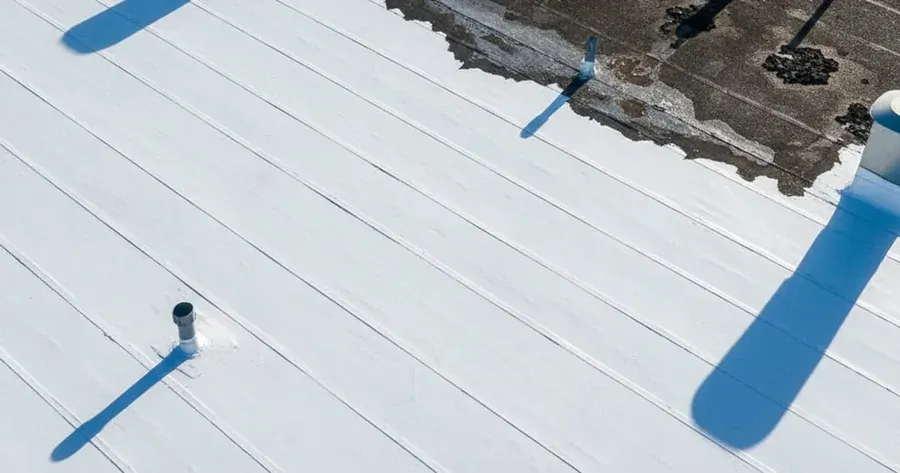
8 Signs Your Commercial Roof Needs Replacement — Not Just Repair
The hardest conversation in commercial roofing is the one where the data says replacement and the property owner wants to hear repair. Repair is always the cheaper number on today’s invoice. It is often not the cheaper number over the next five years — and there are eight specific indicators that reliably distinguish a roof that can be repaired from one that cannot.
This is not a list designed to sell replacements. A property owner who understands these eight indicators is less likely to spend $40,000 on repair work that buys two more years before a mandatory replacement — and that is a better outcome for everyone involved.
1. Leaks That Keep Coming Back After Repair
A correctly executed repair on a viable membrane system should resolve the leak at that location for 5–10 years minimum. If the same location is leaking again within 12–18 months of a repair, one of three things is true: the repair was improperly executed, the root cause was not correctly identified, or the surrounding membrane is in a condition where it cannot hold the repair.
The third scenario — membrane too degraded to hold repair — is the end-of-life indicator. It manifests as: repair patches that curl or separate at the edges despite correct adhesion technique, new leaks appearing within 12–24 inches of a previously repaired area, or seams that re-separate despite correct re-welding. The membrane has lost its ability to bond or accept new material — and no repair technique addresses that.
2. Membrane Shrinkage Beyond 10%
All single-ply membranes experience some thermal movement over their service life. The end-of-life threshold is when accumulated shrinkage has pulled the membrane away from termination points, parapet flashings, and penetration collars to the point where the system is under constant tension. At this stage, re-flashing addresses the visible symptom but not the force causing it — and the newly re-flashed terminations will begin to fail again within the same thermal cycle that caused the original failure.
Visual indicators: visible gaps between the membrane and parapet wall coping, flashings that appear “tented” or standing away from the wall surface, membrane surface that has developed regular wrinkling patterns around penetrations indicating sustained tension stress.
“When we see a roof where the membrane has shrunk away from every parapet and every curb, there is no repair that fixes that. You can re-flash everything — and we have been doing it on this roof for six years — but the membrane body is under tension 365 days a year and it will keep pulling those flashings loose. The membrane is done. It is fighting you.”
Wet insulation is one of the clearest end-of-life indicators because it is almost always a sign that water has been infiltrating for a long time — long enough for the insulation board to absorb moisture throughout its thickness. Core samples that show wet or discolored insulation across more than 20–25% of the roof area indicate widespread, systemic water infiltration that spot repairs cannot reverse.
Wet insulation matters for reasons beyond the moisture itself: it loses R-value (saturated polyiso can drop to R-2 from an original R-6 per inch, a 67% reduction in thermal performance), it promotes biological growth, and it accelerates corrosion in the steel deck below. A roof with widespread insulation saturation requires complete tear-off and insulation replacement regardless of the membrane condition — at which point, the incremental cost of installing a new membrane over the new insulation is far less than the cost of the insulation work alone.
Steel deck corrosion, wood deck rot, and structural deflection (sagging between deck supports) are conditions that cannot be addressed by any membrane replacement alone — but they are also indicators that the building’s roofing system has been allowing water infiltration for long enough to cause structural degradation. This is the most serious end-of-life indicator because deck damage affects the structural integrity of the building, not just the waterproofing.
Deck damage is often not visible from the roof surface. It becomes apparent during tear-off when the contractor removes insulation and reveals corrosion or deflection in the deck below. This is one of the primary reasons legitimate commercial roof replacement contractors include explicit deck assessment allowances in their proposals — and why proposals that do not include this allowance should be viewed with skepticism.
5. More Than 25% of the Surface Has Been Repaired
Cumulative repair coverage exceeding 25% of the total roof area is a quantitative threshold that the roofing industry uses as an end-of-life indicator. The reasoning: each repair area is a potential failure point for the adjacent unrepaired membrane, repair patches alter the thermal performance and drainage characteristics of the roof surface, and the cost of all individual repairs has now exceeded the cost of the replacement system — making future repair expenditures economically indefensible.
6. The System Has Exceeded Its Design Life
A 20-year-warranted TPO roof at year 22 is not a roof that has failed — but it is a roof that is operating beyond its designed performance envelope, with increasing failure probability each additional year. The expected cost of maintenance, repair, and emergency response rises sharply in the years past design life as the various failure modes described above begin to converge.
More importantly, a system operating past its design life almost certainly cannot obtain manufacturer warranty coverage for new work — meaning any significant repair investment is made without the warranty protection that makes that investment defensible. See our guide on how long commercial roofs last by system type for specific design life benchmarks by membrane.
7. Energy Bills Are Climbing Without Explanation
A roof with saturated insulation delivers a fraction of its original thermal performance — and that thermal degradation shows up directly in HVAC energy costs before it shows up as an active leak. If a building’s heating and cooling costs have increased 15% or more year-over-year without a change in occupancy, equipment, or rate structure, a roof moisture survey is warranted. Infrared imaging can map insulation saturation across the entire roof surface in a single inspection, providing both a moisture map and a quantified estimate of the R-value loss causing the energy cost increase.
8. Your Insurance Carrier Is Flagging It
When a commercial property insurance carrier sends a notice flagging the roof condition as a coverage concern, the property owner has a defined response window — typically 60 to 90 days — to demonstrate remediation or risk cancellation of coverage. This is not a negotiation situation. Carriers that have flagged a roof condition and received no response will either non-renew the policy or specifically exclude roof-related damage claims. Either outcome is worse than the replacement cost itself.
Insurance carrier roof flags are typically triggered by aerial imagery analysis (insurers use satellite imagery to identify aged, discolored, or visibly deteriorated membranes), prior claim history, or a property inspection. If you have received such a notice, contact a commercial roofing contractor immediately for a documented assessment — the carrier needs to see evidence of either remediation in progress or a contracted replacement schedule before the response deadline.
For guidance on what commercial roof replacement actually costs and how to plan the capital expenditure, see our full replacement cost guide. Acting on these indicators before they trigger an emergency is always the financially optimal path.
Get an End-of-Life Assessment
Pro Exteriors provides written roof assessments with core sample data, moisture mapping, and a documented recommendation — repair, maintain, or replace — based on real evidence rather than sales pressure.
Commercial Roof Replacement Cost Guide
How Long Does a Commercial Roof Last?
What to Expect During a Commercial Re-Roof
For the service page this article supports, see commercial roofing contractor.
Related reading: /blog/storm-season-prep-commercial-roofs/ and /blog/roof-repair-vs-replacement-decision-guide/.