

commercial roofing
Commercial Roof Repair Vs Replacement | Pro Exteriors
Commercial roof repair vs replacement decisions drive lifecycle cost control. Learn the data-backed thresholds DFW, Denver, Wichita, KC, and Atlanta facility.
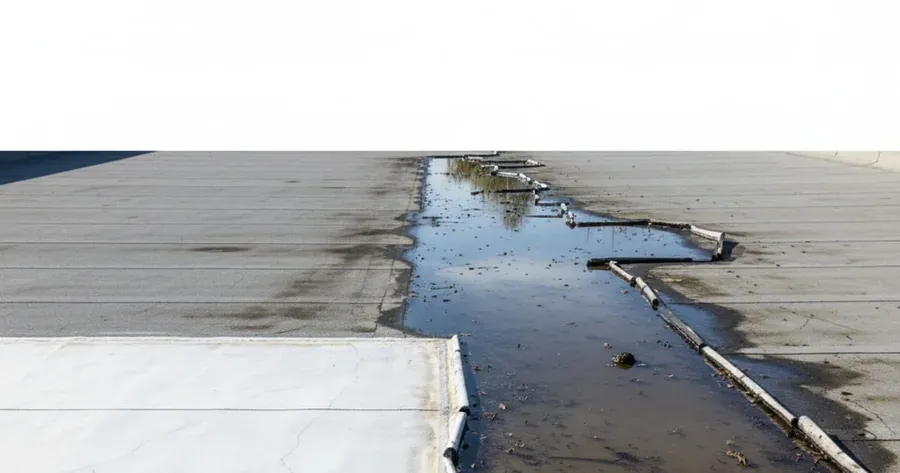
commercial roof repair vs replacement choosing between commercial roof repair or replacement often delineates facility managers controlling their capital budgets from those ambushed by them.
Making the wrong decision costs money, whether you patch a roof that requires replacement and spend twice or prematurely replace a roof with years left and burn through capital.
Use this guide as a defensible framework for determining repair vs. Replace in all of Pro Exteriors’ service markets: Dallas - Fort Worth, Denver, Wichita, Kansas City and Atlanta.
The Key Metrics That Inform Repair vs. Replace
Three quantitative values are key: remaining useful life (RUL), repair - to - replacement cost ratio and the frequency of leaks within a rolling 24-month period.
RUL is your jumping - off point.
A commercial flat roof membrane - whether TPO, EPDM, PVC or modified bitumen- has an intended design life anywhere from 15 to 30 years, based on membrane type and installation quality.
If an infrared scan shows 25% or greater saturation of the insulation, the roof has crossed the threshold where repairs become expensive, with little to show for the cost beyond band - aids.
If you’ve less than 10% saturation and the roof is under 5 years of age since installation, it is almost always beneficial to repair it.
The ratio of repair cost to replacement value provides the clearest financial sign.
Insurance carriers and underwriters are taught to view a repair estimate exceeding 30% of the roof’s full replacement cost as a “red light. ”
If that ratio is 15% or less, repair wins financially.
If you’re between 15% and 30%, RUL and leak frequency begin to shift the balance back to replacement.
Leak frequency is crucial because water intrusions cost more than just sheetrock damage.
Mold remediation, disruption of business operations and tenants and potential liability exposure all carry significant costs beyond material damage.
If you experience more than three recorded leaks in 24 months on a roof under 10,000 square feet, it suggests a problem not with a few minor punctures, but with the fundamental structural failure of the membrane itself.
How the Roof Membrane Type Affects Repair Decisions
Not all commercial flat roofing membranes age the same way, altering the calculus of repair or replace.
TPO membranes use heat - welded seams.
When seam leaks occur within the first 7 years, it’s almost certainly an installation issue, which should be repairable at no cost to you if under warranty from the original contractor.
If seam failures appear at 12 to 15 years, it’s likely a problem with the membrane’s fatiguing nature and you should consider planning for roof replacement.
EPDM is a single - ply rubber roof membrane that stands up to extreme temperature fluctuations - both hot Denver weather and the wide range of Kansas City seasons - well.
Failures with punctures or separated lap seams on an EPDM roof are almost always repairable.
Signs of extensive alligatoring of the surface or shrinkage pulling away flashings from parapets indicates replacement.
Modified bitumen and built - up roofing systems on DFW and Atlanta commercial buildings often have “alligatoring”-oxidation of the surface that looks worrying but is often just a coating failure, not a membrane failure.
A knowledgeable roof inspector will clearly distinguish between a surface - level alligator failure and a true substrate - delamination failure before you proceed with spending any money.
You can see TPO vs. EPDM vs. PVC comparison with tensile strength and UV - resistance data here: [http: //blog. proexteriors. net/commercial - roofing - systems - comparison](http: //blog. proexteriors. net/commercial - roofing - systems - comparison).
Integrate Repair vs. Replace into Capital Planning
The question of repair vs. Replacement should never be addressed impulsively.
Whether there was hail in the forecast or a water spot was seen after opening up ceiling tiles.
Roof assessment has to become a normal process tied to a planned asset management strategy that schedules inspections, catalogs repairs and forecasts funds for future replacements.
Roof assessments with both infrared scanners and core cuts should be done on roofs under 15 years old once every three to five years.
Every two years for roofs 15 years old or more.
From that, create and update your repair history.
Once five years of repairs approach 40% of the roof’s replacement value, replace the roof soon.
Pro Exteriors commercial roof repair services go beyond patches and invoicing, as our condition assessments feed directly into your capital planning, not just temporary fixes.
DFW Richardson customers will want to know that hail has been a huge problem on commercial buildings, as hail season occurs in both spring and summer in DFW, with hail damage often paid for by insurance claims which reduce or offset the costs of replacement.
This is true for hail season on the Colorado Front Range, as well.
Combining a roof replacement project with a valid insurance claim cycle may be possible, however, doing this is a financial and capital management option, not an insurance loophole.
In Wichita and Kansas City, the harsh combination of wind - driven rain and frequent freeze/thaw cycles tend to wear away flashings before any problem will show up in the membrane itself.
As such, you’ll find flashings on older or younger roofs needing much closer attention in these locations.
The Recommendation That Applies Across All Pro Exteriors Markets
Get the facts before talking price.
Facility managers who come prepared to contractor discussions armed with detailed infrared scans and documentation on repair history can negotiate well from a place of knowledge.
Otherwise, you rely solely on a contractor’s cursory visual check and estimate over the phone.
Pro Exteriors covers DFW, Denver, Wichita, Kansas City and Atlanta, with our commercial roof assessment being applied at every single location.
Please call Pro Exteriors to schedule a condition assessment.